

How are lessons from the 2026 session and the NOVA Roadmap shaping advocacy priorities for 2027?
What happens during a General Assembly session has real consequences for Northern Virginia’s employers, workers, and communities. The 2026 session brought progress on key issues, setbacks on others, and important signals about what lies ahead. With more than 100 NOVA Roadmap bills tracked and notable wins in NVC’s policy priorities, NVC’s Government Relations team is taking a moment to reflect on what we learned this year and how those lessons will shape advocacy in the months ahead.
_________________________________________________________________

Clayton Medford
Senior Vice President, Government Relations, NVC
Looking ahead, how is NVC using the NOVA Roadmap to guide its advocacy priorities for the next General Assembly session?
The NOVA Roadmap remains the foundation for our legislative agenda. The Roadmap Executive Councils and Policy Committee will continue to play key roles in shaping the 2027 legislative agenda. We hear our members — and are developing our legislative agenda using those voices.
In alignment with the NOVA Roadmap, we are leading data‑driven research and advocacy to capture business leader sentiment, educate the broader community, and inform policy solutions. These efforts include our quarterly 2026 Business Leader Surveys and reports such as the NOVA Housing Supply Framework, produced in partnership with the Northern Virginia Building Industry Association (NVBIA) and Northern Virginia Association of Realtors® (NVAR).
NVC’s Senior Vice President of Government Relations Clayton Medford and Government Relations Manager Charlie Russ have been convening General Assembly leaders and Northern Virginia legislators in post-session meetings. Through these meetings, we are addressing the region’s economic competitiveness and requesting renewed government–business partnership with the Spanberger Administration.
As we prepare for next year, what policy priorities are you hearing the most about from conversations with NVC members?
Housing affordability is something we hear about constantly — from employers and from the people who work for them. We made some progress this session, but we need to move faster. We need to cut red tape, speed up permitting, and remove barriers to development.
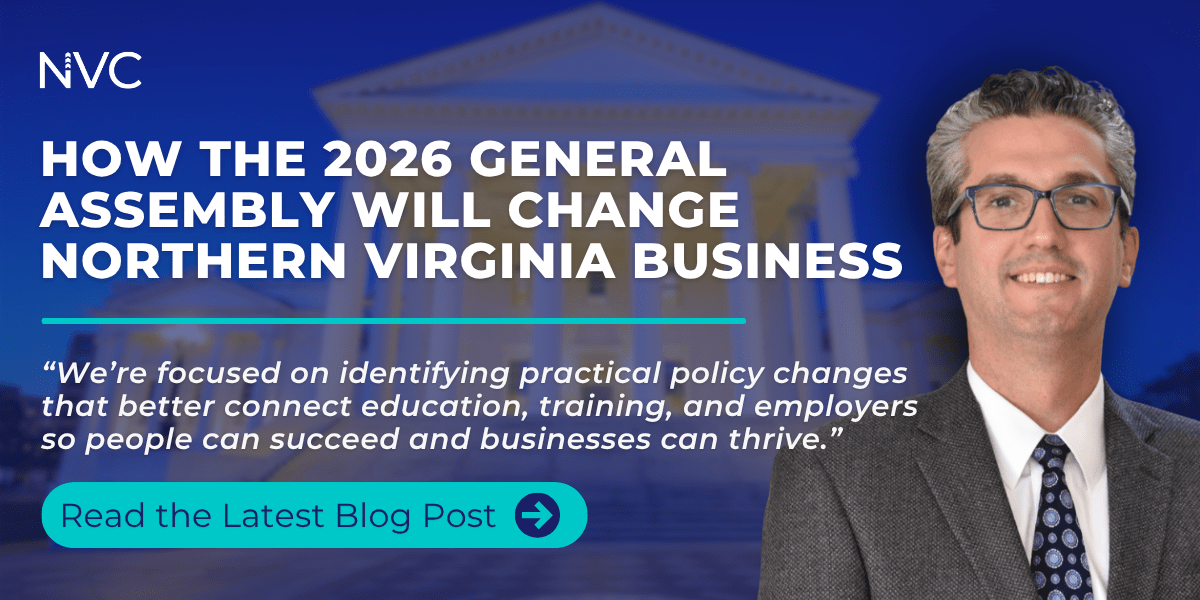
Workforce development is another everyday reality for our members. Businesses want to hire and stay competitive, but they are searching for the right talent to do it. The NOVA Roadmap prioritizes this, and we feel this session didn’t go far enough. We’re focused on identifying practical policy changes that better connect education, training, and employers so people can succeed and businesses can thrive.
Our members care deeply about keeping Virginia competitive and business‑friendly. Aligning with the Roadmap, we believe it takes intentional choices that support innovation, growth, and confidence in the region’s future.
Which issues coming out of this session do you expect will be most active, or require the most attention, when lawmakers return next year?
The major tax proposals that were defeated are likely to return, in part because legislative proposals that would provide revenue — such as a bill regulating skill games and the Fairfax County casino bill — were vetoed.
SB 454, a bill that would allow by-right production of multi-family housing on commercial property, was defeated on the Senate floor at the 11th hour, and we expect that bill to return in 2027.
How is NVC building on relationships formed this year to strengthen our influence and effectiveness in the next legislative session?
With our advocacy and collaboration with leaders in the General Assembly, we successfully passed some key pieces of the affordability agenda such as the Employee Child Care Assistance pilot program, a bill allowing the creation of an Affordable Dwelling Unit Program in all localities, and the Yes In God’s Backyard bill to allow religious organizations to build housing on their property. These wins gain the trust of our business community and grant us valuable working relationship inside the legislature.
NVC is also proudly revamping its NOVABizPAC activities, further growing and cementing our relationships and influence among key legislators in the Assembly.
Additionally, we are actively maintaining and strengthening those relationships through post-session meetings and key programming like NOVA Roadmap Innovators & Stakeholders Exchange (NOVA RISE) which was attended by several General Assembly members and Fairfax County leaders.
What are NVC’s top advocacy goals between now and the next General Assembly to ensure Northern Virginia remains competitive and prepared for growth?
We’re focused on turning the NOVA Roadmap into real policy. That means drafting and advancing legislation in the 2027 session that directly addresses the goals we’ve laid out.
_________________________________________________________________
Between now and the next General Assembly session, NVC is focused on turning the NOVA Roadmap into meaningful policy results. That means working closely with lawmakers, grounding our advocacy in solid data, and continuing to bring member voices into every conversation. By laying this groundwork now, we are positioning Northern Virginia to enter the 2027 session ready to move forward with confidence, clarity, and purpose.
To learn more about our reports, coalition letters, and other advocacy-related work, visit our advocacy page. To explore what NOVA Roadmap priorities were taken to this year’s General Assembly session, view our 2026 Legislative Agenda.


